




ON COMICS CHARACTERS

ON SCI-FI FRANCHISES




ON GRANT MORRISON

ON TV AND MOVIES



OTHER BOOKS



DOCUMENTARY FILMS


1999. It was the fourth issue of Marvel Knights’ Black Panther. For the previous three issues, Everett K. Ross had been tormented by Mephisto, the being who – more than any other demon found in… [more]
In April 2024, Hermes Press reissued the Dark Shadows newspaper strip that ran from March 1971-March 1972. Gerard J. Waggett provides a remembrance of that series. Three weeks before ABC dropped the Gothic soap opera… [more]
Although Gawain is victorious in it, Thomas’s vision also implies his own defeat at Captain Britain’s hands: after Gawain has killed Lancelot, he lifts the visor of his helmet to see the face of the… [more]
The Mighty Thor #273: The newsman, Harris Hobbs, tells Thor he is going to film a television special about the Norse gods on location – in Asgard. Thor suggests such a request is not his… [more]
The presence of UNIT analogues W.H.O. in a rural location, investigating an anomaly connected to the land, brings to mind the folk horror-themed episodes of Doctor Who referred to by Scovell and mentioned above; however,… [more]
The Brave and the Bold #111 (“Death Has the Last Laugh”) proclaimed itself “the strangest team-up in history,” pairing Batman with his arch-enemy, the Joker. The two join forces to capture a gangster who has… [more]
Although the title of the Marvel UK comic book series The Knights of Pendragon (1990-1993; Pendragon hereafter) refers to a group of superheroes, the main protagonist of its first six issues (July-Dec, 1990) is very… [more]
The Mighty Thor #272: Thor flies over New York City, enjoying the freedom of a beautiful day on Earth, but still he spots some real trouble: a bully is beating up a kid in front… [more]
The Dead and the Dying, written by Ed Brubaker and illustrated by Sean Phillips, is the third volume of Criminal, and it marks the point where the series really hit its stride. This is where… [more]
From literally beginning to end, Christopher Priest’s Black Panther made use of so-called ‘beat panels’ for comedic effect. Although Priest had incorporated beat panels into his repertoire prior to Black Panther, and would continue to… [more]
The Mighty Thor #271: Thor – with other members of the Avengers – calls on Nick Fury of S.H.I.E.L.D. (which stood for the rather awkward “Supreme Headquarters, International Espionage, Law-Enforcement Division;” were there other Divisions?).… [more]
When Nature Attacks! Having achieved his goal of joining with the Green, Woodrue quickly begins his attack on the human race. Woodrue starts small but his escalation is devastating. The killing of a group of… [more]
Joining the Monster Squad Monsters enter our lives at an early age. We are told stories about the things that dwell in the shadows and the corners of our minds. The creatures that we –… [more]
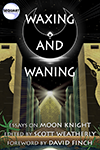
Sequart is proud to announce the publication of Waxing and Waning: Essays on Moon Knight, edited by Scott Weatherly. Since Moon Knight first appeared as a villain in 1975, he’s spent the decades shifting and… [more]
The last few years have taught us the importance the LGBTQ+ community places upon personal pronouns. In 1969, Wonder Woman writer / penciller / editor Mike Sekowsky understood the value of pronouns when it came… [more]
The Mighty Thor #270: Blastaar, the Living Bomb-Burst, engages Thor in battle and prevents him from retrieving his hammer. Conveniently though, before Thor can change back into Don Blake, Blastaar throws him into an alley.… [more]
Sequart is proud to announce the publication of Unauthorized Offworld Activation: Exploring the Stargate Franchise, edited by Rich Handley and Joseph Dilworth, Jr. In 1928, an archeological dig in Giza, Egypt, unearthed a giant ring and… [more]
On the 50th Anniversary of Tomb of Dracula, Gerard Waggett concludes his look back at the book, warts and all. [more]
The Mighty Thor #269: The splash page shows Thor reading a newspaper at a New York City newsstand. As a crowd gathers, he gets pressured into signing autographs. Telling his fans he has duties to… [more]
On the 50th Anniversary of Tomb of Dracula, Gerard Waggett takes a look back at the book, warts and all. [more]
The Mighty Thor #268: Damocles escaped from Thor, but events take place leading Thor right back to him. To begin this issue, the police contact Dr. Blake and ask him to contact Thor. Being one… [more]
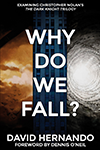
Sequart is proud to announce the publication of Why Do We Fall?: Examining Christopher Nolan’s The Dark Knight Trilogy, by David Hernando. The Dark Knight Trilogy, composed of Batman Begins (2005), The Dark Knight (2008) and The Dark Knight… [more]
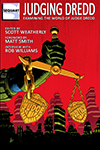
The character of Judge Dredd that appears in the 1995 adaptation from director Danny Cannon and starring Sylvester Stallone, then later in the more faithful 2012 film with Karl Urban, is based on a British… [more]